Most mathematicians are introverted, in that they usually require a substantial amount of time alone, to work on solving problems, investigate ideas and extend their personal knowledge. They derive joy from the eureka! sensation that comes from cracking a problem that was hitherto unsolved, or extending the boundaries of a particular field of knowledge. They may find joy in working collaboratively or competitively, but their main orientation is usually focussed on their personal achievement.
The quintessential introvert in the field of mathematics was Kurt Gödel. As a person, Gödel was as enigmatic as his arcane theorems. While mathematicians populate the full spectrum from introvert to extravert, Gödel defined a new category at the introvert end of the scale. From early in his life, people described him as a loner. Classmate Harry Klepetar wrote, “Gödel kept more or less to himself and devoted most of his time to his studies.” His stolid personality was manifest in his reluctance to engage in debate when his opinions or ideas were challenged. Like Newton, he was impatient with those who misunderstood his ideas and was not interested in persuading people to his point of view.
Gödel seemed to fear social interaction. When speaking to someone, he would seldom make eye contact and during his 38 years at the Institute, he had no friends with whom he would regularly converse, except for Albert Einstein. In his book, Reflections on Kurt Gödel, logician Kao Wang writes: (p. 29)
Gödel once told me that he used to make appointments with people, but then did not go to the appointments. This gave him a sense of social activity and the possibility of communication without actually having to talk to anyone.
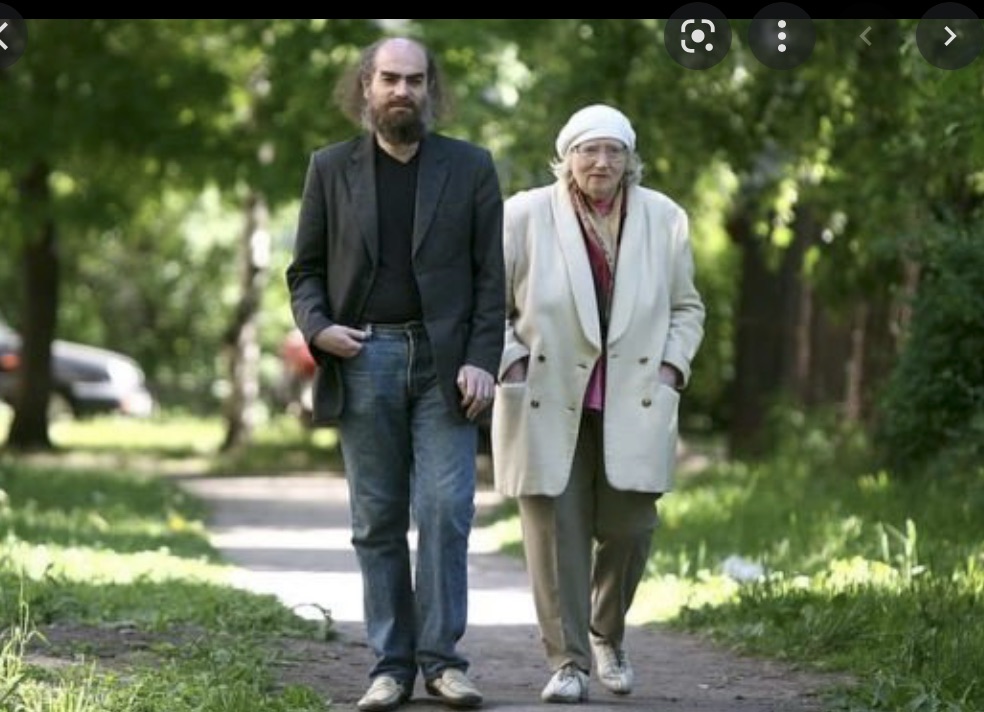
Similarly, John Nash, featured in the movie A Beautiful Mind was an extreme introvert. More recently, Fields Medallist Grigory Perelman, who proved the Poincaré Conjecture, is extremely introverted, never married and lives with his mother. He rejected the Fields medal and the million dollar Millennium Prize.
However, introversion is expressed in different ways that sometimes makes a mathematician appear to be an extrovert. Paul Erdős is the mathematician who has collaborated with more colleagues and published more joint papers than any other mathematician, but Paul was quite introverted. He had a unique persona that some described as “enigmatic” and others termed as “strange” in its inherent contradictions. For example, he was warm and witty in conversation, but his relationships were emotionally distant and he eschewed physical contact with fellow humans. As described by his biographer Paul Hoffman (p. 9)
He didn’t like people to touch him. If you extended your hand, he wouldn’t shake it. Instead, he’d limply flop his hand on top of yours. “He hated it if I kissed him,” said Magda Fredro, a first cousin who was otherwise very close to him.
One mathematician who was fundamentally an introvert, yet derived a great deal of pleasure from social connections, was John von Neumann. Biographer Ananyo Bhattacharya, describing von Neumann during his work on the Manhattan project at Los Alamos writes:
Von Neumann visited the secret lab in the desert [Los Alamos] for a month or two each year. He loved the camaraderie, the poker games and the glorious booze- and cigarette-fuelled discussions, which could go on until all hours.
Yet, von Neumann was thinking incessantly about problems that were constantly churning in his mind and would often leave a party he and his wife were hosting to retire his office to explore an idea that entered his head. Though an introvert, Johnny had a tinge of extroversion that made him very likeable to most people and a valued member of every committee on which he served. Yet, once Johnny conversed with another mathematician and became aware of a particular problem, he usually raced 5 steps ahead of everyone else, moving alone at his own pace and publishing groundbreaking research.
So it would seem that although most mathematicians are introverts, some are able to work collaboratively, but even most those who work collaboratively, charge ahead and carry the ball over the goal line by themselves.