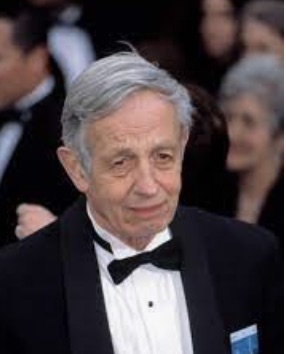
John Nash, like most of the most brilliant and highest achievers in mathematics and physics, was hooked on the Eureka! sensation. This is the shot of dopamine that comes when you solve a difficult problem. It’s what drove Archimedes down the street, naked, yelling eureka! [I have solved it!], when he discovered the first law of hydrodynamics while taking a bath. This same Eureka! sensation, impelled Tesla to continue his exploration of wireless transmission, even through bankruptcy and deprivation. Von Neumann, Schwinger, Feynman, and Erdos were all dopamine junkies, hooked on solving problems–and the harder the problem, the bigger the hit.
Most people get their dopamine hits through athletic achievement, artistic creation, or even shopping, but for those who pride themselves on their intellectual prowess, nothing touches the joy center more powerfully than solving a problem that no other human has been able to solve. This is the intrinsic motivation that enslaves these great mathematicians and physicists.
Nash was a “big game hunter who wanted to solve the toughest problem, but he was aware that mathematicians do their best work before age 30. Carrying a sense of urgency to the extreme, he worked feverishly on Riemann’s famous embedding problem, after discovering that it had become of recent interest, owing to its connection to Einstein’s general theory of relativity. When he solved the problem, only to discover that he had been pre-empted by De Giorgi, who had solved it a few months earlier, he was devastated. A mathematical colleague, Gian-Carlo Rota later commented, (Nasar A Beautiful Mind, p. 220) “When Nash learned about De Giorgi, he was quite shocked. Some people thought he cracked up because of that.”
Soon after that deep disappointment, Nash began the search for another blockbusting problem. Upon learning that the mathematical community was hitting a brick wall in attempting to find solution to the partial differential equations associated with turbulence, he wanted to ensure that the problem was sufficiently important to justify the investment of his time. As Nasar observes, (A Beautiful Mind p. 218). “Nash began working on the problem almost as soon as Nirenberg suggested it, although he knocked on doors until he was satisfied that the problem was as important as Nirenberg claimed.”
Climbing the Mount Everest of mathematics by solving its hardest and most famous problems is the intrinsic motivation behind this total lifelong dedication. Of course, there are extrinsic motivations like university appointments, and prestigious prizes like the Fields Medal or the Abel Prize (or the Nobel for physicists) but these are only the formal recognition of the fruits of a dopamine addiction. We are all the fortunate beneficiaries of these “dopamine junkies.”